Revealing those hidden costs when buying new equipment

The Total Cost of Ownership for a capital project is much larger than what you can see on the price tag of a piece of equipment.
When investing in equipment, many bakeries don’t see all the hidden costs, especially when it comes to ensuring food safety. Those initial dollar signs from potential labor savings and more can easily shift from the profit to loss column if long-term overhead and expenses are ignored.
That’s why many food safety experts recommend that bakeries create a sanitation-focused equipment procurement checklist before purchasing equipment at the International Baking Industry Exposition (IBIE), which runs Sept. 13-17 in Las Vegas, or Pack Expo Las Vegas, to be held Sept. 29-Oct. 1.
Darin Detwiler, founder and chief executive officer of Detwiler Consulting Group, suggested starting off with a list of design standards to ensure the new equipment complies with ANSI/ASB Z50.2 (American National Standards Institute/American Society of Baking Sanitation Standard for Bakery Equipment), EHEDG (European Hygienic Engineering & Design Group) or 3-A Sanitary Standards.
Next, confirm that all food-contact surfaces are made with non-toxic, non-absorbent and corrosion-resistant materials. Don’t forget to prioritize equipment that can be easily and quickly disassembled for cleaning without tools.
“Ensure all surfaces can be visually inspected, cleaned and sanitized with no hidden crevices or harborage points,” Detwiler advised. “Ask for the manufacturer’s cleaning and sanitation documentation, validation data and recommended standard operating procedures.”
Combined expertise of cross-functional team members during the evaluation process helps identify potential risks and ensures that any new equipment aligns with the existing sanitation and food safety protocols.”
Wan Mei Leong, food safety specialist, Commercial Food Sanitation (CFS), an Intralox company, urged bakeries to take a proactive approach to food safety and sanitation.
“It is essential to involve cross-functional team members, such as those from sanitation, quality assurance, engineering, maintenance and production early in the evaluation process,” she said. “Their combined expertise helps identify potential risks and ensures that any new equipment aligns with the existing sanitation and food safety protocols.”
Additionally, conduct a thorough risk assessment to understand the specific risk profile of the bakery’s products and operations.
“This includes evaluating intrinsic product characteristics, handling frequency and the potential for allergen cross-contamination, if applicable,” she said. “Selecting hygienically designed equipment that matches this risk profile is a critical step in safeguarding both food safety and operational efficiency.”
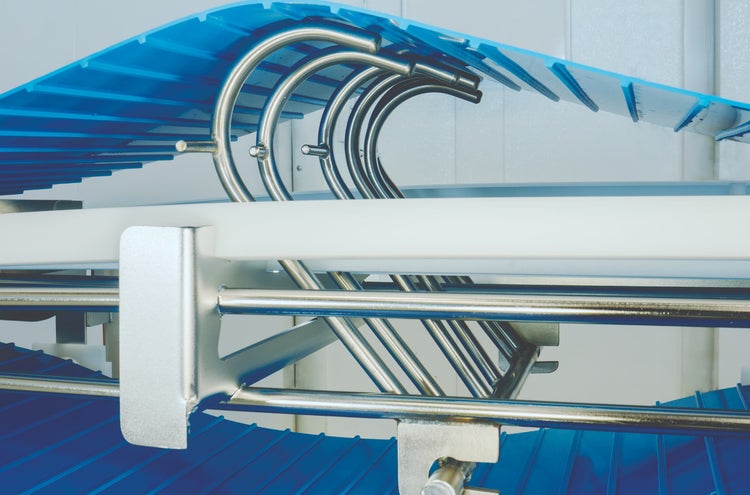
When evaluating equipment, create a hygienic design checklist that can determine whether it supports a bakery’s specific sanitary operations and allows for efficient cleaning.
“It’s also crucial to confirm that the materials used in the equipment are compatible with the cleaning chemicals and procedures, as this can prevent premature failure,” Leong said. “Clear communication of your hygienic design requirements to original equipment manufacturers (OEMs) is crucial. Partnering with OEMs who understand and support both your operational and sanitation needs increases the likelihood of selecting equipment that meets your long-term goals.”
Don't just focus on the initial purchase price; consider the Total Cost of Ownership. Partnering with OEMs who understand and support both your operational and sanitation needs increases the likelihood of selecting equipment that meets your long-term goals.”
She said bakeries should also consider the total cost of ownership, not just focusing on the initial purchase price. Those include long-term costs such as labor, water and chemical usage, contamination risks and production downtime, which can significantly impact profitability.
Jorge Izquierdo, vice president, market development, PMMI, provided other key recommendations.
For instance, gauge the availability of a qualified workforce to perform sanitation processes and, if necessary, consider investing in equipment that can automate or simplify sanitation, including clean-in-place systems, tool-free disassembly, accessible parts and cleaning time.
To avoid any future performance problems, remember to consider the chemical compatibility of a bakery’s current cleaning practices and the materials and seals of the new equipment. Look for allergen-friendly systems to speed up the cleaning process.
Many groups and companies provide free tools for evaluating sanitary design and other food safety tips on their websites. For instance, CFS offers the Total Cost of Ownership (TCO) Calculation and Comparison Tool.
Meanwhile, Izquierdo suggested bakeries reference the OpX Leadership Network document, “One Voice for Hygienic Equipment Design for Low-Moisture Foods,” which provides a guide on how to evaluate hygienic equipment.
With food safety in mind, bakeries should look for equipment that has been certified as conforming to a hygienic standard, noted Jon Anderson, president of JRA Occupational Safety Consulting Services and managing director of the Bakery Equipment Assessment Group.
“The initial investment is paid back through design efficiencies which shorten downtime, reduce cleaning labor and return time for production,” he said. “It is becoming more important that we look for equipment that meets both production and safety requirements. Design is critical, and cleaning verification and validation are key.”
Dave Watson, food, bakery and snacks engineering subject matter expert, The Austin Co., recalled how sanitary design has gone from an afterthought to a primary focus for most bakeries when it comes to buying equipment. He recalled giving a presentation on the topic at a conference 20 years ago.
“A vendor asked if bakers would be willing to pay the price for it? Now, they have no choice with sanitary design being top-of-mind,” he said.
Explore Hygienic Design Certification — where hands-on learning empowers your team and builds lasting food safety habits.
This article is an excerpt from the August 2025 issue of Baking & Snack. To read the entire feature on Food Safety & Sanitation, click here.