Bakeries tackle a new high-tech challenge
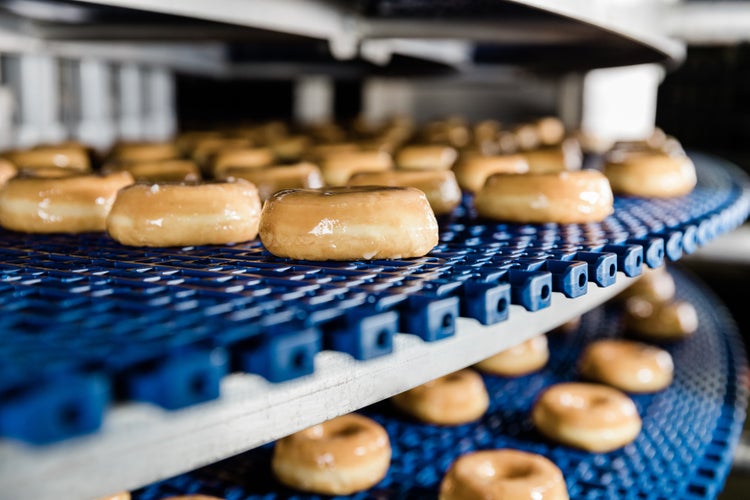
For bakeries and snack producers seeking to invest in the next generation of automation, food safety is about to get a tad more complicated. Often these machines can be the most difficult to clean.
That may be especially true for robotics with cameras, sensors and other electrical components that can be susceptible to airborne flour as well as oil, crumbs, pieces of dough and other particles that are typically found throughout bakeries and snack food plants.
“Bakers need to be aware of the decisions they need to make when ordering a robotic system,” said Dave Watson, food, bakery and snacks engineering subject matter expert, The Austin Co. “If it’s a heavy washdown environment, the supplier needs to know in advance because they’re not typically designed for that.” However, he added, robotics have come a long way.
“If you go back 20 years, you wouldn’t want to get a hose anywhere near a robot,” he recalled. “There were too many open areas, wires, tubes and components that couldn’t stand virtually any type of washdown. Most of the new robotic systems are certainly capable of being wiped down or washed lightly, but if they are going to be subject to a heavy chemical or high-pressure cleanup, everyone needs to be aware of that.”
Overall, cleaning mixers, dividers and even conveyors can be challenging, depending on their design, materials and operational constraints. That said, the added complexity of robotics may result in a greater number of crevices, joints and enclosed areas that are less accessible for sanitation and inspection, noted Wan Mei Leong, Food Safety Specialist, Commercial Food Sanitation (CFS), an Intralox company.
“These components may also include intricate moving parts, sensors and control systems that are sensitive to moisture and chemicals, making traditional cleaning methods difficult to apply without risking damage and malfunction,” she observed. “Additionally, cleaning these systems may involve disassembly and specialized procedures, which can extend cleaning time, increase labor demands and lead to greater production downtime.”
Moreover, the intricate design of robotic arms, grippers and devices creates hard-to-reach areas that allow product accumulation and harborage sites for mold and microorganisms and require a more detailed sanitation process, said Jon Anderson, president of JRA Occupational Safety Consulting Services and managing director of the Bakery Equipment Assessment Group (BEAG).
“The longer the cleaning cycle, the less time available for production. The more time spent cleaning and higher cleaning frequencies reduce the possibility of contamination but also drive up labor costs,” he pointed out.
It’s not easy to simplify the cleaning of robotics and other state-of-the-art digitally controlled systems because these high-performance operations have so many parts and sensitive components that many bakeries haven’t had to contend with in the past.
Specifically, sanitation teams should pay attention to seals, joints, fasteners, wires and hose assemblies, noted Darin Detwiler, founder and chief executive officer of Detwiler Consulting Group and food safety author and industry expert.
Other key challenges include touch screens, sensors and PLCs that may not be waterproof or chemical-resistant. Smart conveyors with embedded sensors require cleaning without dislodging or damaging integrated systems while 3D-printed components or custom parts may have irregular surfaces or chemical-sensitive materials.
He recommended bakeries implement training programs on dry cleaning techniques such as vacuuming or alcohol-based wipe downs for sensitive components, or if necessary, use protective covers or removable shields during washdown cycles.
Bakeries should take extra care with vision systems and sensors, which are frequently positioned near the product contact zone and must be sanitized using validated procedures and compatible chemical agents to ensure both hygiene and equipment integrity."
Additionally, store detailed standard operating procedures (SOPs) from the equipment manufacturer for cleaning protocols specific to advanced features and maintain a log of validation tests, such as visual inspection reports and ATP (adenosine triphosphate) swabs that verify effectiveness of the process for high-tech components.
Detwiler singled out end-of-arm tooling (EOAT) as especially critical because it has direct food contact and must be cleaned frequently and thoroughly, even though the tools may be made of porous, absorbent materials or even rubber that poses additional food safety challenges.
Leong pointed out that EOATs such as grippers or suction cups also contain niches and harborage points that, if not properly maintained and cleaned, can pose significant contamination risks.
Jorge Izquierdo, vice president, market development, PMMI, suggested that bakeries select robotic systems designed specifically for food environments with an IP69K rating that represents the highest level of protection against dust and allows for high-pressure, high-temperature power washing.
“Special attention should be paid to the cleanability of end-of-arm tooling,” he advised. “They are built specifically for each application with no standardization and require special attention as they are the touchpoints between the robot and the product.”
Discover how Sanitation Essentials and Hygienic Design Training empower your team and make food safety second nature. Hands-on learning makes it stick.
Leong said bakeries should take extra care with vision systems and sensors, which are frequently positioned near the product contact zone and must be sanitized using validated procedures and compatible chemical agents to ensure both hygiene and equipment integrity.
“Additionally, joints and cabling, especially when poorly organized, can accumulate dust and food particles,” she said. “These areas should be regularly inspected and cleaned, with particular attention given to components located above food contact surfaces to prevent cross-contamination.”
When handling allergens and frequent product changeovers, Leong strongly recommended using dedicated end-effectors or grippers for each product or allergen. Color-coding EOATs based on allergens and other factors can prevent cross-contamination and reduce the risk of mix-ups during changeovers.
“Maintaining multiple sets of end-effectors allows one set to be cleaned and sanitized while another remains in operation, minimizing downtime and supporting continuous production,” she advised. “Additionally, bakeries should keep dedicated cleaning tools, such as brushes, nozzles and wipes, specifically assigned to robotic components and, where applicable, to individual allergen categories. This targeted approach enhances sanitation effectiveness and supports compliance with food safety standards.”
In today’s challenging times, the latest advances in technology enable bakeries to reduce labor, boost capacity and resolve a myriad of pressing issues. However, investing in high-tech can’t put everything on automatic, especially when it comes to food safety and sanitation.
This article is an excerpt from the August 2025 issue of Baking & Snack. To read the entire feature on Food Safety & Sanitation, click here.