Keeping clean, mean manufacturing machines
Ensuring a strong regime of health and safety protocols for manufacturing operations throughout the confectionery sector remains critically important, as Confectionery Production editorial board member Andy Baxendale notes from his CFS/Intralox course in Amsterdam.
The CFS Institute (Commercial Food Sanitation) has been an Intralox company since 2012 and specialises in food safety and sanitation challenges throughout the world, in particular developing sanitation and hygienic design professionals for the food industry.
Its approach is based on a combination of consulting, training and education which aims to deliver the highest levels of sanitation, food safety and operational effectiveness – essential considerations for any business’s brand reputation and long-term profitability, and ultimately ensures safe food for all.
Several salmonella related outbreaks in chocolate in the last 20 years or so make their skills and abilities entirely relevant, with the course content focused on root cause analysis and corrective and preventative actions, in addition to providing valuable insights that instill into the participants the fact that there is no room for complacency in chocolate manufacture, especially where salmonella is concerned. The effects on public health and the reputation of manufacturers can be disastrous, and despite stringent food safety measures, outbreaks still occur leading to recalls, financial losses and consumer distrust.
Held at Intralox/CFS’s headquarters in Hoofddorp, Netherlands, the location is excellent being only one stop on the train out of Schiphol Airport, which takes approximately five minutes for the princely sum of four Euros. On exiting the station, the walk to the factory takes some ten minutes through beautiful flat tulip fields, passing the Intercity Hotel which is the recommended residence for participants.
Among its core objectives were managing salmonella contamination events in chocolate, including root cause analysis and corrective and preventative actions. It also examined making risk-based decisions when developing effective cleaning protocols considering hygienic design.
In addition, the event also explored designing and developing an effective environmental monitoring program, as well as developing approaches to reduce future contamination risks.
Hazards in chocolate
The main risks to chocolate are those identified by a HACCP based approach, namely physical, chemical and microbiological hazards.
Physical hazards can come from numerous sources and include items such as insect fragments that can be present in raw materials through to machine pieces or packaging shreds in the event of production related failures.
Chemical hazards can also arise in raw materials which may become contaminated with heavy metals or pesticides, in addition to lubricant residues from machinery or allergens from cross contamination caused by poor handling and storage.
The main microbiological hazard in chocolate processing is salmonella which can pose a significant risk to human health and requires stringent controls to ensure that the final product is safe for human consumption. According to the Rapid Alert System for Food and Feed, most recent incidents within the chocolate product category are linked to salmonella.
Characteristics of Salmonella
There are some 2,700 known varieties of salmonella, with nearly all being pathogenic to humans, and presenting symptoms from gastrointestinal diseases to death in the worst case. Mostly originating in the gut of warm blooded animals, entry routes into food stuffs are varied. In the case of chocolate this can be from raw cocoa beans with about 8.2 per cent potentially contaminated. Poor environmental controls are also a contributing factor, for example ingress of dirty water, which caused a serious outbreak in 2006 for a major manufacturer.
Growth is influenced by several key factors including energy source, time, temperature and water. The way the water is bound into the product (water activity or aW) is the factor which can either help or hinder microbial growth and it is important to know this value. Typical values for chocolate are 0.4–0.65 which do not allow microbial growth, however salmonella can survive low water activity for an extended period of time – in some cases 9–12 months.
As it possesses a low infectious dose in chocolate, this means that only a few cells are necessary to cause illness, which lead to the Advisory Committee for Microbial Safety of Foods (ACPSF, UK FSA) concluding that “the presence of salmonella in RTE foods such as chocolate is unacceptable at any level”.
To prevent any contamination, strict cleaning, product testing and microbial verification are needed. Care must be taken to determine correct sample sizes to test, so small outbreaks in a product are detected — if only one sample is subject to test it has more chance of missing any cells than if a sample of say 30 units if 25g are tested.
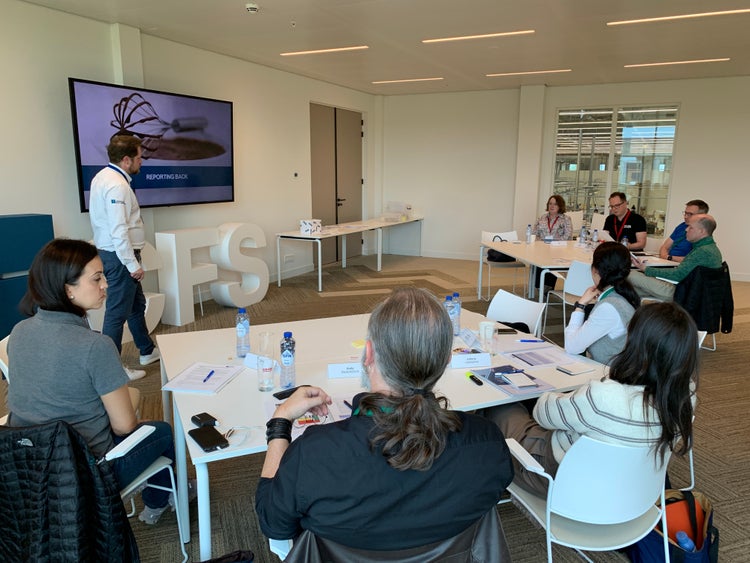
The group opening for the course
Breakout sessions
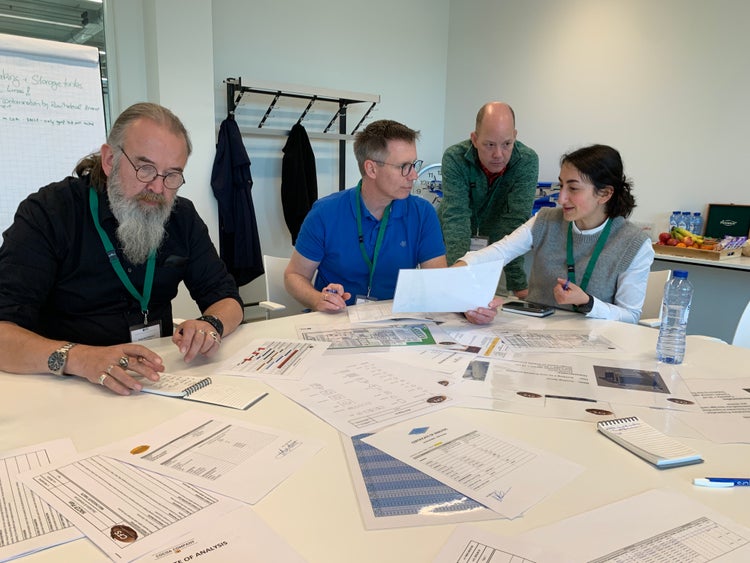
The course was punctuated by several breakout sessions which grouped together course members to discuss various topics associated with sources, prevention and testing in relation to salmonella. These were extremely well put together and very thought provoking as all participants had to input their contributions before discussing centrally with the whole group.
Topics included business impacts of a salmonella outbreak, actions relating to the discovery of a presumptive salmonella result, how to improve hygienic design in a chocolate factory and a full crisis simulation where the groups had to examine data and information presented from a theoretical salmonella contamination incident, work out how it had arisen and present cleaning / preventative strategies to prevent a recurrence. All the breakouts were excellent in stimulating an understanding of the causes, risks, consequences and required actions associated with an outbreak, especially the final one which was set up to challenge the participants.
The initial information provided had to be examined which then led to more questions being asked and more information provided, eventually allowing (if the correct questions were asked) the participants to form a complete picture of the outbreak presented and propose solutions for mitigation, handling of the situation and prevention of re-occurrence. Several “red herrings” had to be eliminated during the exercise, some of them obvious but others which sent the participants down the wrong path and required a lot of discussion and thinking to sort out and present the correct solutions. It was a very realistic situation to unravel and definitely promoted an understanding of the complexities involved should it happen in a live situation.
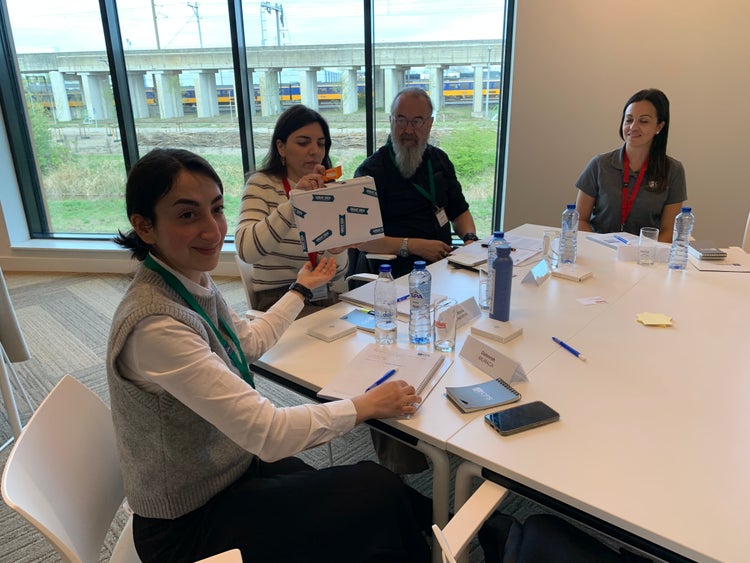
At the conclusion of the exercise all breakout groups came back together for a collective discussion on the whole scenario, how it happened and root cause analysis to prevent it happening again. It enabled participants to draw on their own knowledge and experiences whilst also utilising any new information that they had gained.
The course tutors assumed the roles of the factory representatives and supplied an initial amount of information at the start and then supplied further as and when they were asked – this made it much more accurate in terms of a real live event, as not all factors were presented upfront and had to be requested as discussions took place between the group members.
The final part of this breakout session was to examine the actual cause of the scenario presented and discuss how to improve the factory concerned in terms of hygienic design to prevent further outbreaks, including all costs involved. This was an ideal last part as it focused on the causes of the previous problem and allowed all members to have an input into preventative strategies going forward.
When making risk based decisions, food safety must never be compromised by accepting less than perfect.
Hygienic design
A very important part in preventing salmonella outbreaks is the hygienic design of plant and equipment by a systematic approach, and indeed this is reinforced in several food safety management systems: BRCGS Food Safety Standard v9 and FSSC 22000 v6 to name but two.
Although not just focused on salmonella prevention, they both highlight the importance of risk based design and construction, commissioning and the importance of having a documented purchasing specification that is signed off by a multi-disciplinary team within the factory. Non conformances are raised during certification audits if the above criteria are not met.
The ability to dry clean is a very important consideration, together with the impact of only being able to clean at product changeovers – methods must be sought that do not compromise food safety by introducing elements of wet cleaning that can be hard to completely dry before re-introducing raw materials, thus leading to possible microbial growth.
When making risk based decisions, food safety must never be compromised by accepting less than perfect.
Cleaning and disinfection
Cleaning and disinfection or sanitation is defined in various different ways around the world, however they all concur that it must be carried out to leave food contact surfaces in a suitable hygienic condition by which ever methods are chosen.
Confirmation of the effectiveness of cleaning operations is of the utmost importance, with common methods utilised including: visual checks, sight, touch, smell, microbiological sampling, ATP (adenosine triphosphate) testing for organic residues, as well as enzyme linked or polymerase chain reaction testing for allergenic residues.
Factors that must be taken into account are the hygienic design of the plant/equipment and the characteristics of the residues to be removed.
In the case of chocolate equipment, wet methods are not favoured, with cleaning being undertaken by draining followed by the use of purging materials, for example hot fat (>80°C) or surplus chocolate – the total volume employed should be two to three times the inner volume of the segment/equipment being cleaned. Ethanol based solutions (although not the safest method) can be used at 50 per cent concentrations, but if any plastic components are included they may be affected, plus the material is highly flammable. If possible, complete separation of the processing equipment is preferable to allow access and effective cleaning into all areas. If water-based solutions are to be used, a sufficient drying step is necessary to prevent residual moisture allowing microbial growth. “Dry” steam can be used (temperature around 180°C and 3–5 per cent residual moisture; however care must be taken not to leave any condensate behind, especially in dead ends.
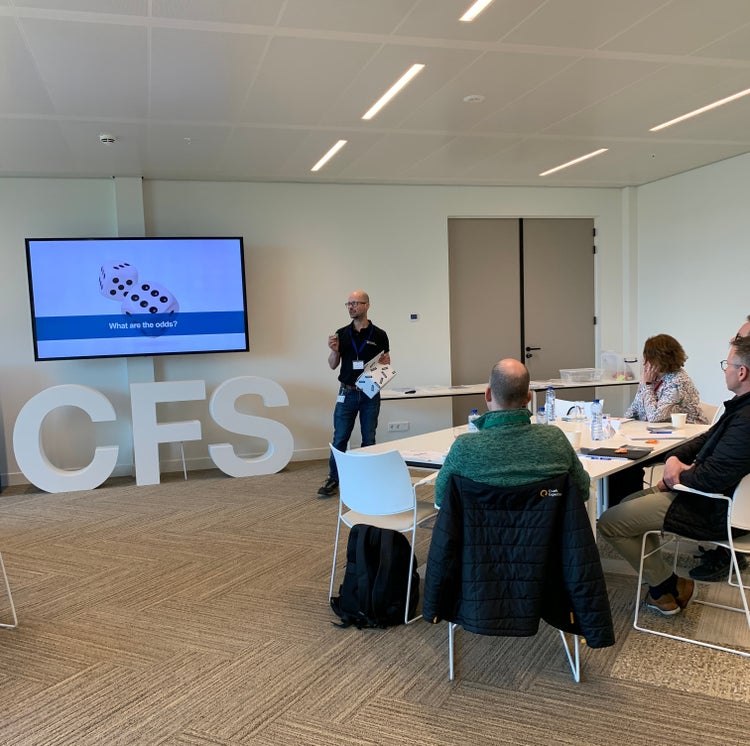
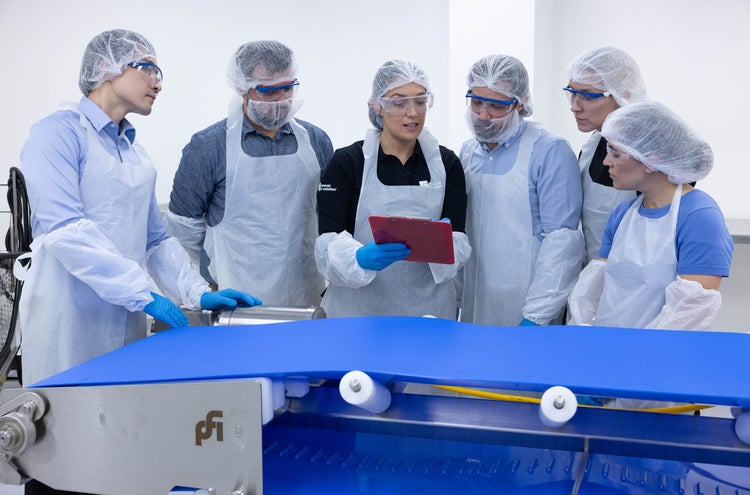
Experts from CFS offered key insights into maintaining best practice
Conclusion
The fact that salmonella can contaminate a low moisture, high sugar and high fat product like chocolate and subsequently survive to replicate in humans is very concerning and deserves more considerations than currently given by the industry as a whole; this in itself is borne out by the fact that there have been so many chocolate related outbreaks of it in the last 20 years or so.
There can be no room for complacency or arrogance when dealing with a potentially fatal microbial contaminant.
This CFS course "Managing Salmonella Contamination Risks in Chocolate" should be attended by all employees involved in chocolate manufacture – from the CEO at the top right through the organisation.
It provides invaluable insight into all facets of chocolate manufacture with essential advice on prevention of contamination, and if the worst come to the worst, dealing with any potential incidents and their aftermath in the most efficient manner to limit the damaging aspects to both the general public and also the organisation itself.
Presented by extremely knowledgeable, professional and friendly tutors the course is an invaluable couple of days which leaves all attendees not only much more informed and capable of preventing salmonella outbreaks, but also leaves them in no doubt of all steps which must be taken in the event of an outbreak.
The "Managing Salmonella Contamination Risks in Chocolate" course is an invaluable couple of days which leaves all attendees not only much more informed and capable of preventing salmonella outbreaks, but also leaves them in no doubt of all steps which must be taken in the event of an outbreak.