Building a safer tomorrow: the role of hygienic design in allergen risk mitigation

In today’s food production landscape, allergen management is not just a regulatory requirement –it’s a moral obligation to supply safe food for consumers with allergies. Food allergies in Australia are on the rise, currently affecting 10% of infants. With 57% of food recalls being allergen-related, this is a critical issue that demands ongoing attention.
Allergen management in food production
In a production process, there are many areas that can introduce risk. From ingredients and other incoming goods to employee practices. Notably, packaging or labelling errors continue to be amongst the top three causes of allergen related recalls in Australia, with the root cause lying in improper changeover practices or change management protocols that overlook critical aspects of food safety, particularly allergen risk.
Daily practices in production, maintenance and sanitation impact food safety, and the entire process needs to be considered in an allergen management program. This article will focus on hygienic design.
It’s important to emphasise that while many aspects of allergen control are critical and often well-managed, shared production lines or rooms present unique challenges. In such cases, cleaning and sanitation become the primary defence against cross-contact. Critically, a seemingly minor lapse in sanitation can lead to allergen cross-contact, triggering a product recall or worse, causing severe allergic reactions in consumers.
Even with robust controls in place, hygienic design plays a vital role in enabling effective sanitation and significantly reducing allergen risk.
Hygienic design is not just about compliance; it reflects a commitment to protecting consumers, supporting frontline teams, and building a safer, more resilient food system for the future.
The standards of clean
We cannot discuss hygienic design without first considering effective sanitation, which can be covered in three standards.
Visually clean: This is the most basic level of cleanliness, where there is no visible debris or residue on food manufacturing equipment and surrounding areas. Visual cleanliness is the essential starting point and the first hurdle for any cleaning process in all food production environments. While it is the most basic expectation, it is not sufficient for ensuring food safety.
Unfortunately, it is quite common to see verification swabbing performed on surfaces that still have visible residue remaining, a practise which indicates a fundamental misunderstanding of cleaning principles in food manufacturing. If a surface does not pass a visually clean inspection, it is not ready for verification and is not safe for production.
Microbial clean: After achieving a visually clean surface, the next critical step is ensuring the absence of harmful microorganisms. This is the true target for food processors. Achieving microbial cleanliness is challenging, yet it should be the standard for routine cleaning in food production environments.
Verification of microbial cleanliness typically involves testing food contact surfaces and adjacent areas. These tests confirm that the validated cleaning procedures in place have been effective in reducing microbial risks and maintaining food safety.
Allergen clean: This level goes beyond microbial cleanliness and refers to the complete removal of detectable allergenic proteins from equipment and surfaces. Achieving allergen clean requires validated cleaning procedures and rigorous verification methods, involving highly sensitive protein detection tests.
Crucially, being visually or microbially clean does not guarantee the absence of allergenic proteins. Allergen clean is a distinct and more demanding standard. Allergenic proteins can be particularly stubborn and difficult to remove, especially from complex equipment or hard-to reach areas.
In short, microbial clean is not allergen clean and assuming one implies the other can lead to serious food safety risks.
Sanitation process for allergens
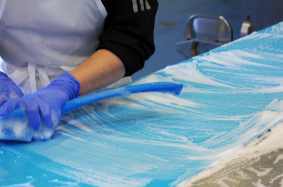
Sanitation, as a critical component of food safety, demands a structured and consistent process that is meticulously followed every time food processing equipment and environments are cleaned. The seven step method, applicable for both dry and wet cleaning, provides a proven framework for achieving effective and efficient sanitation. Within this process, one of the foundational steps is achieving visual cleanliness, which serves as a prerequisite before progressing to subsequent steps. When cleaning to an allergen level, additional measures are often necessary. These may include further disassembly of equipment, product flushes, or push-through procedures to ensure that all visible debris and soil are thoroughly removed. These extra steps are essential because allergenic residues can persist in areas that are not easily accessible or visible.
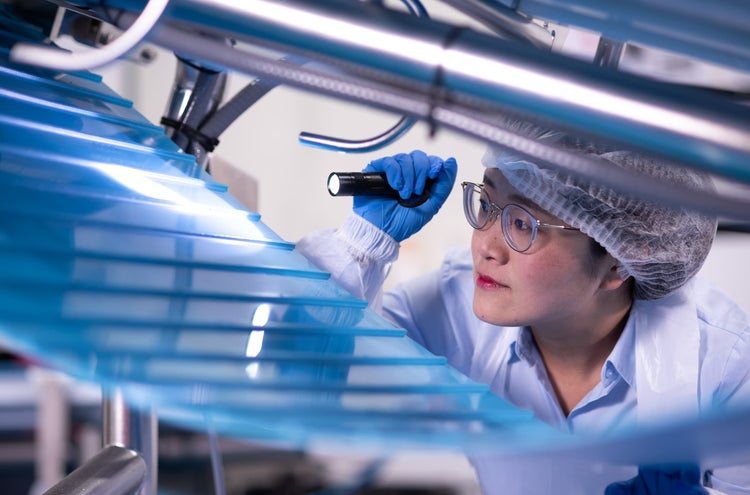
During the pre-operational inspection, visual checks must be followed by verification testing, such as highly sensitive protein detection tests, before equipment is approved for production. This step-by-step approach ensures that cleaning has not only removed visible and microbial contaminants but also potential allergenic residues. This entire process highlights the critical importance of designing equipment and facilities with hygiene in mind. Hygienic design enables easier access for cleaning, reduces the risk of residue buildup, and supports consistent sanitation outcomes, ultimately strengthening the overall food safety system.
Common challenges in sanitation
Sanitation is inherently complex and presents a wide range of challenges. One of the challenges is often labour-related, such as shortages within sanitation teams, the need to train new hires or temporary staff, and language barriers that can hinder communication and consistency. All of these factors can significantly impact the overall effectiveness and reliability of sanitation efforts. In addition, inconsistent cleaning processes and a limited understanding of the importance of using the right tools, combined with a frequent lack of knowledge about cleaning chemicals and their specifics, can compromise the outcomes of each sanitation shift. These gaps in knowledge and execution can lead to ineffective cleaning, increasing the risk of contamination. Compounding these issues is the constant pressure from production, tight schedules and the risk of running overtime, often resulting in sanitation being rushed or even reducing the available time without proper controls in place.
One very critical and often underestimated barrier to effective sanitation is poor equipment and facility design. When equipment is difficult to access or disassemble, it creates hidden areas where products can accumulate during production. These hard-to-reach spots make thorough cleaning both difficult and time-consuming, ultimately compromising food safety and operational efficiency.
The power of hygienic design
Hygienic design refers to the engineering of equipment and facilities with sanitation, food safety, and product quality as core considerations. When these elements are integrated from the very beginning of a project, rather than added as an afterthought, the results are often transformative. Not only does sanitation become more effective and efficient, but the overall operation also benefits.
Unfortunately, in many projects, sanitation is not prioritised during the planning phase. Project goals often focus heavily on production performance, budget constraints, and tight timelines. As a result, design decisions are frequently made without fully considering the implications for sanitation. A common example is the addition of a new production line in an existing facility, without considering the need for cleaning access. This can lead to cramped layouts, limited accessibility to and within equipment, and ultimately, increased operational costs related to sanitation due to longer cleaning times and higher labour demands.
There are, however, compelling examples of how even modest design improvements can yield significant benefits. One such case involved a globally operating snack manufacturer that retrofitted its facility with a more hygienic conveyor belt system. The result was a 75% reduction in cleaning labour, a 50% decrease in cleaning time, and a 100% pass rate on ATP swab tests, eliminating the need for any re-cleaning. This case clearly illustrates how thoughtful design changes, even after installation, can dramatically improve sanitation outcomes and operational efficiency.
It’s important to note that this oversight in design is not unique to sanitation. Other critical functions, such as maintenance, are also frequently missed during project planning. This highlights a broader issue: the need for cross-functional collaboration and foresight in facility and equipment design to ensure all operational needs and functions, such as sanitation, maintenance, and safety, are adequately addressed from the start.
Cross-functional decision making and direct link to total cost of ownership
The most effective design decisions are made by cross-functional teams that include input from all key departments such as sanitation, operations, maintenance, quality, HR, and finance. This holistic and collaborative approach ensures that all operational needs are considered from the start, leading to operational excellence. When done well the project will lead to:
- Lower operational costs
- Reduced food safety risk
- Improved production efficiency and workplace safety.
When sanitation and other departments are integrated early in the design process, the total cost of ownership of equipment and facilities is significantly reduced. Rather than focusing solely on the initial investment, a strategic, cross-functional approach considers:
- Investment costs, including:
- Equipment purchase price
- Project management and planning
- Fabrication and installation
- Trial runs and commissioning
- Startup training for staff.
- Ongoing operational costs, including:
- Labor for operations, cleaning, and maintenance
- Equipment downtime and its impact on productivity
- Product yield and efficiency
- Cleaning windows and production scheduling
- Training and retraining of staff
- Equipment or facility upgrades (eg. retrofitting for improved hygiene)
- Cleaning verification and testing
- Re-cleans due to ineffective sanitation
- Root cause analysis following food safety or quality incidents
- Costs associated with unintended allergen cross-contact and potential product recalls.
By designing with these factors in mind, organisations can not only enhance food safety but also achieve long-term cost savings and operational resilience.
Designing for a safer future - final takeaway
In an era where food safety is under increasing scrutiny, hygienic design stands out as a proactive and powerful tool in allergen risk mitigation. By embedding hygiene into the foundation of equipment and facility design, food manufacturers can:
- Minimise the risk of allergen cross-contact
- Enhance the effectiveness and efficiency of sanitation
- Reduce operational costs and improve long-term sustainability
- Empower cross-functional teams to make smarter, safer decisions.
Ultimately, hygienic design is not just about compliance; it is about commitment. A commitment to protecting consumers, supporting frontline teams, and building a safer, more resilient food system for the future.
Karin Blacow is a Senior Food Safety Specialist at Commercial Food Sanitation, Industry Lead for Protein & Bakery, and manages QSR & Retail for ANZ.